What acoustic foam is used for
Acoustic foam sheets are used to absorb reflected sound within a room or enclosure. They can help reduce echo, flutter and harsh reflections, making a space feel clearer and more controlled.
Acoustic foam is not the same as soundproofing. It mainly treats sound inside a space. It does not normally stop sound passing through walls, floors or ceilings on its own.
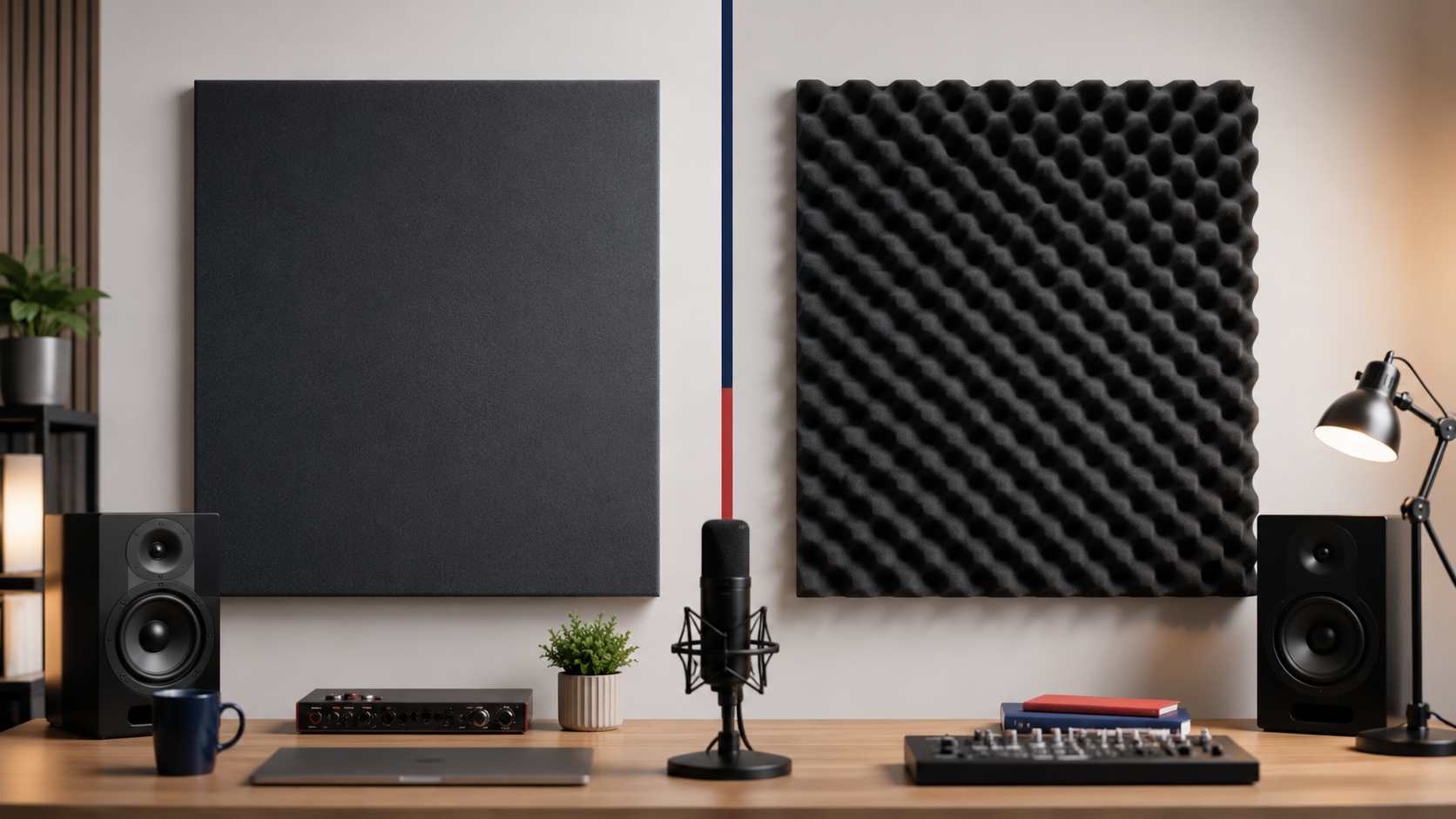
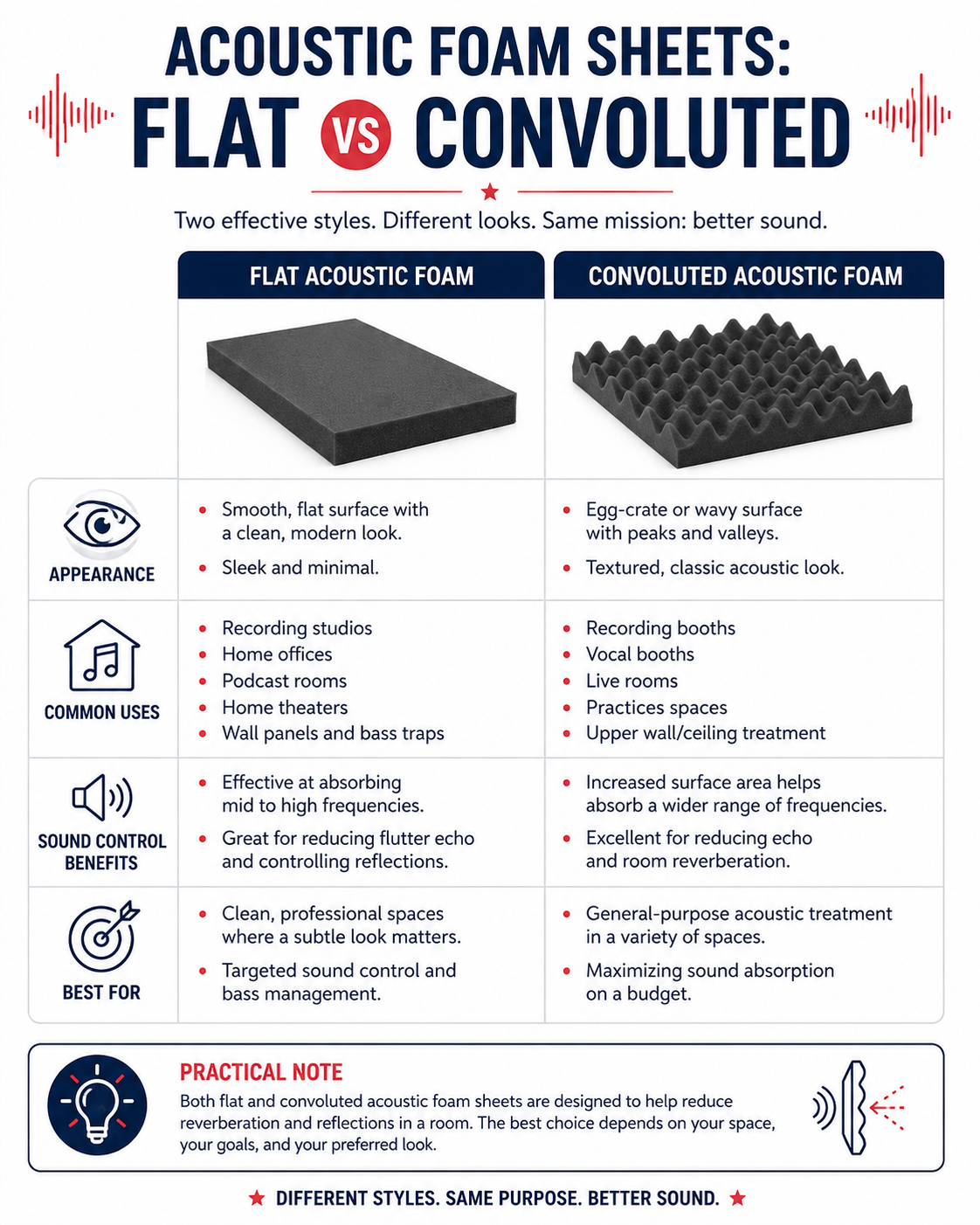
Flat acoustic foam sheets
Flat acoustic foam sheets offer a clean, simple appearance and can be useful when a smooth surface is preferred. They can be fitted to walls, panels, enclosures or other surfaces where sound absorption is needed.
Flat sheets may be chosen for practical, commercial or visible areas where the finish needs to look tidy.
Convoluted acoustic foam sheets
Convoluted acoustic foam has a raised profile. This shape increases the exposed surface area and is often used in studios, media rooms, machinery enclosures and other sound treatment projects.
The profile can be useful where acoustic treatment is the main priority and a textured appearance is acceptable.
Choosing between the two
Choose flat acoustic foam where a simpler look is preferred. Choose convoluted acoustic foam where the raised profile is useful for the application or where acoustic performance is the main concern.
The right choice also depends on thickness, fire performance, fitting method and the environment where the foam will be used.
Check the specification
Before ordering acoustic foam, check the product page and data sheet. This is especially important for commercial, public or regulated spaces where fire performance and material suitability matter.
You can browse available options in the Acoustic Foam Sheets section.