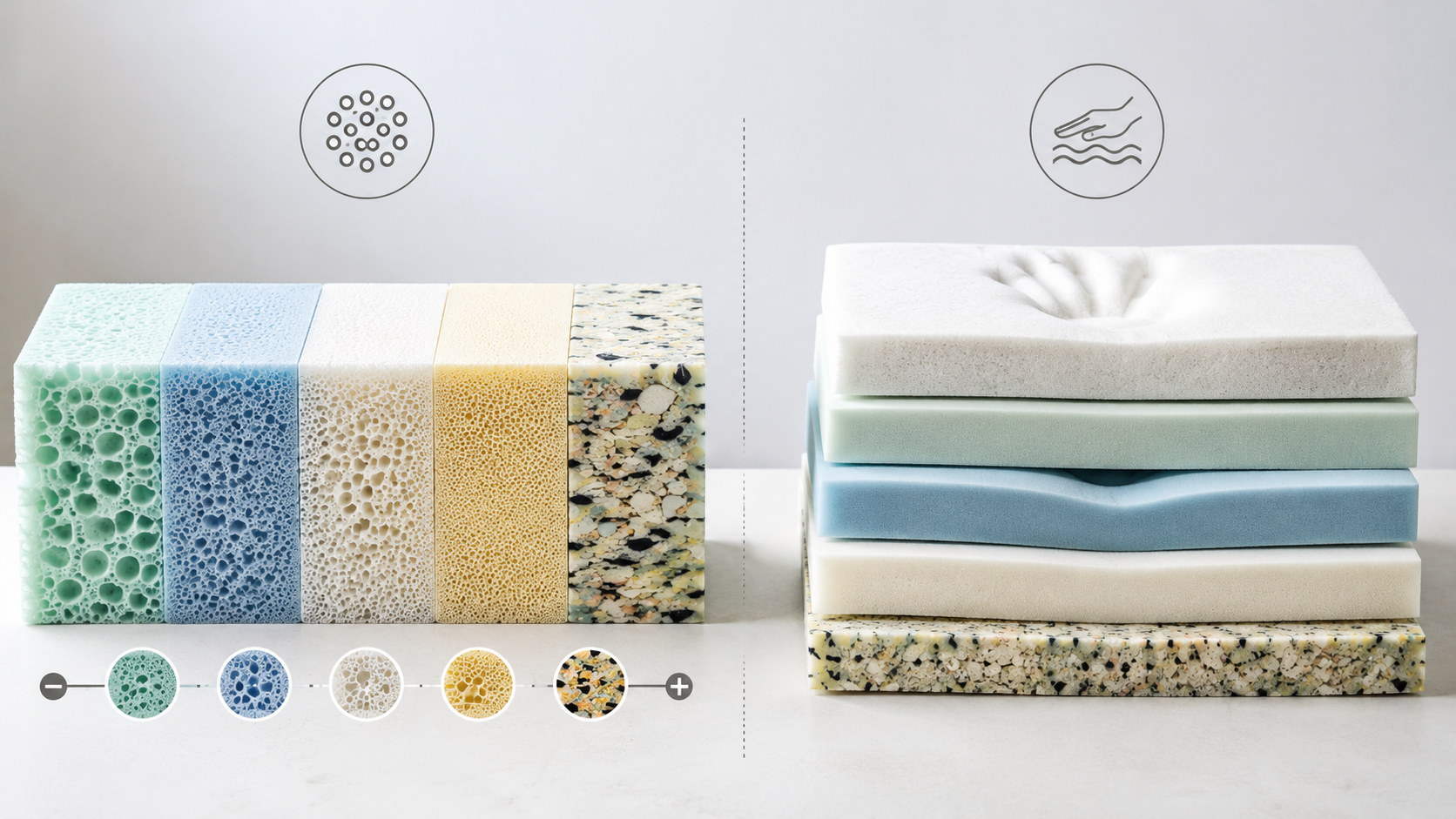
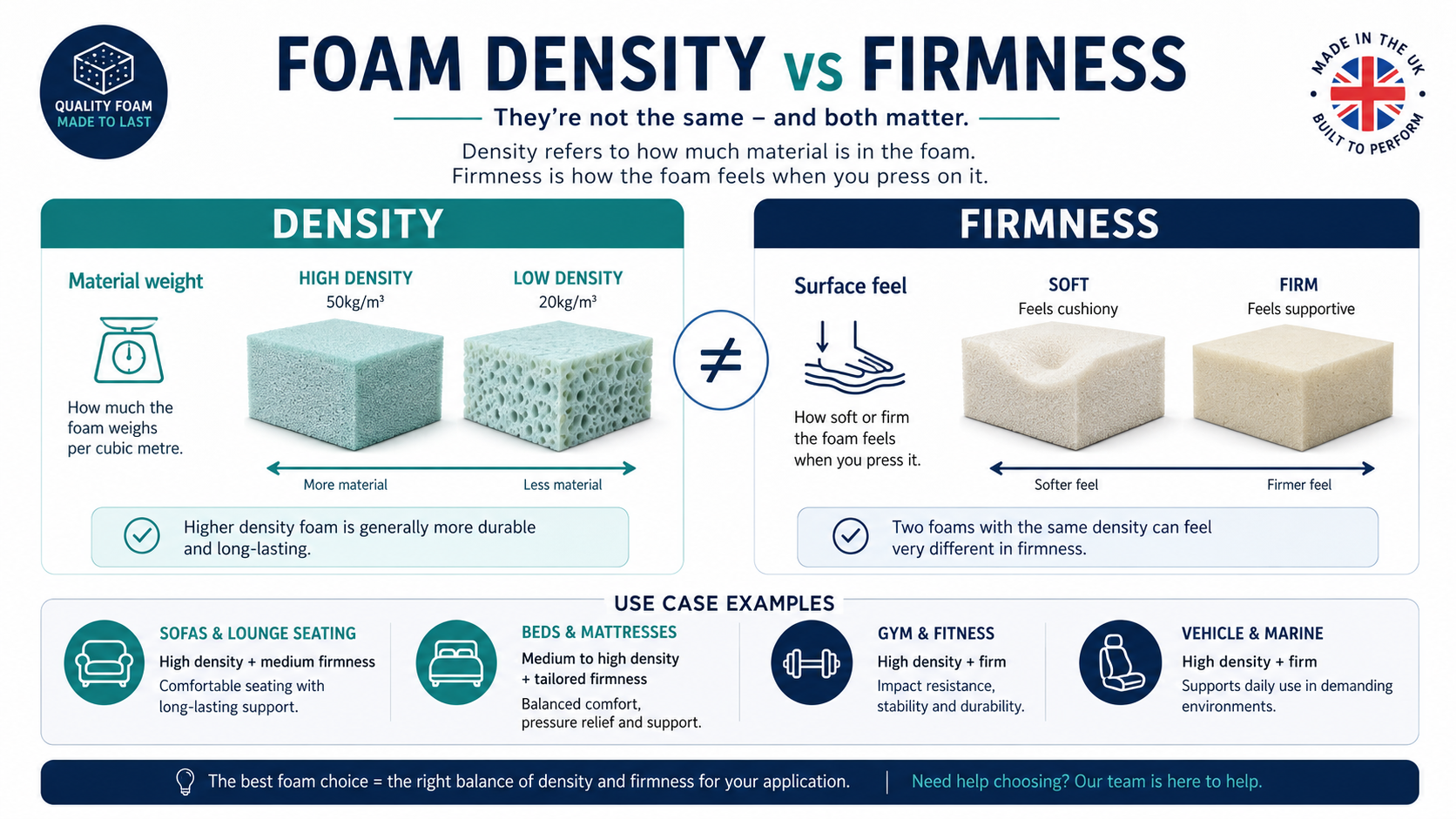
Density and firmness are different
Foam density and foam firmness are often confused, but they describe different things. Density relates to the amount of material in the foam. Firmness relates to how hard or soft the foam feels when compressed.
A foam can be high density without feeling extremely firm. A foam can also feel firm without being the best choice for every use.
What density can tell you
Density can affect durability, weight, support and performance. It is one of the details used to understand the foam specification.
For products used regularly, such as seating, mattresses and protective packaging, density can be an important part of choosing the correct grade.
What firmness can tell you
Firmness affects the feel of the foam in use. A soft foam compresses more easily, while a firm foam resists compression more strongly.
For a seat cushion, firmness affects comfort and support. For packaging foam, it affects how the foam holds and protects the product.
Why both matter
Choosing foam by density alone can lead to the wrong result. Choosing by firmness alone can do the same. The correct foam depends on the full specification and the purpose of the product.
A mattress, packaging insert, acoustic panel and chair cushion all need different performance characteristics.
Check the product information
Always check the product page and data sheet before ordering. If the foam is for a specific technical or regulated use, confirm the requirements before purchase.
You can review the Foam Data Sheets for more detail.