Why thickness matters
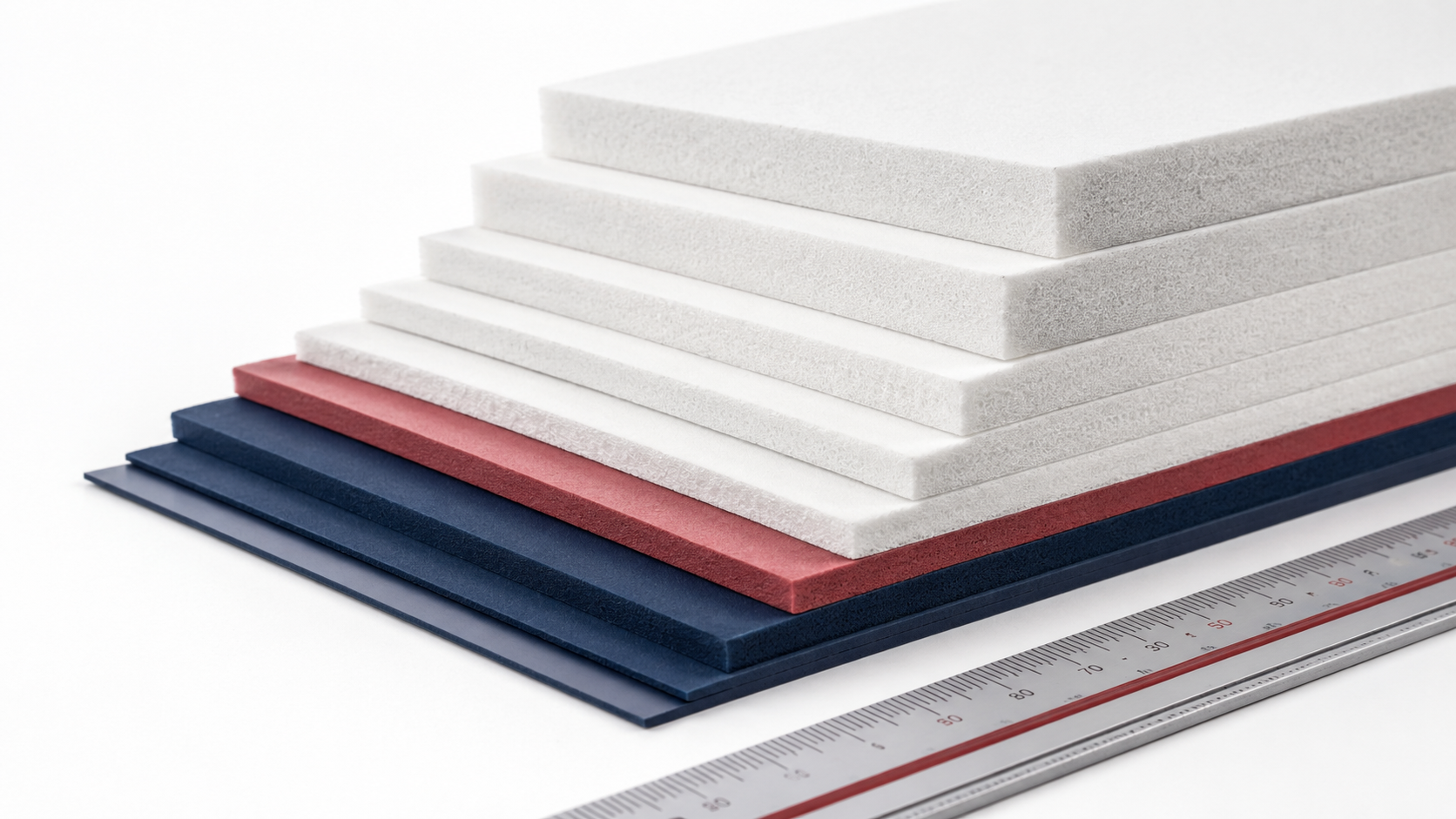
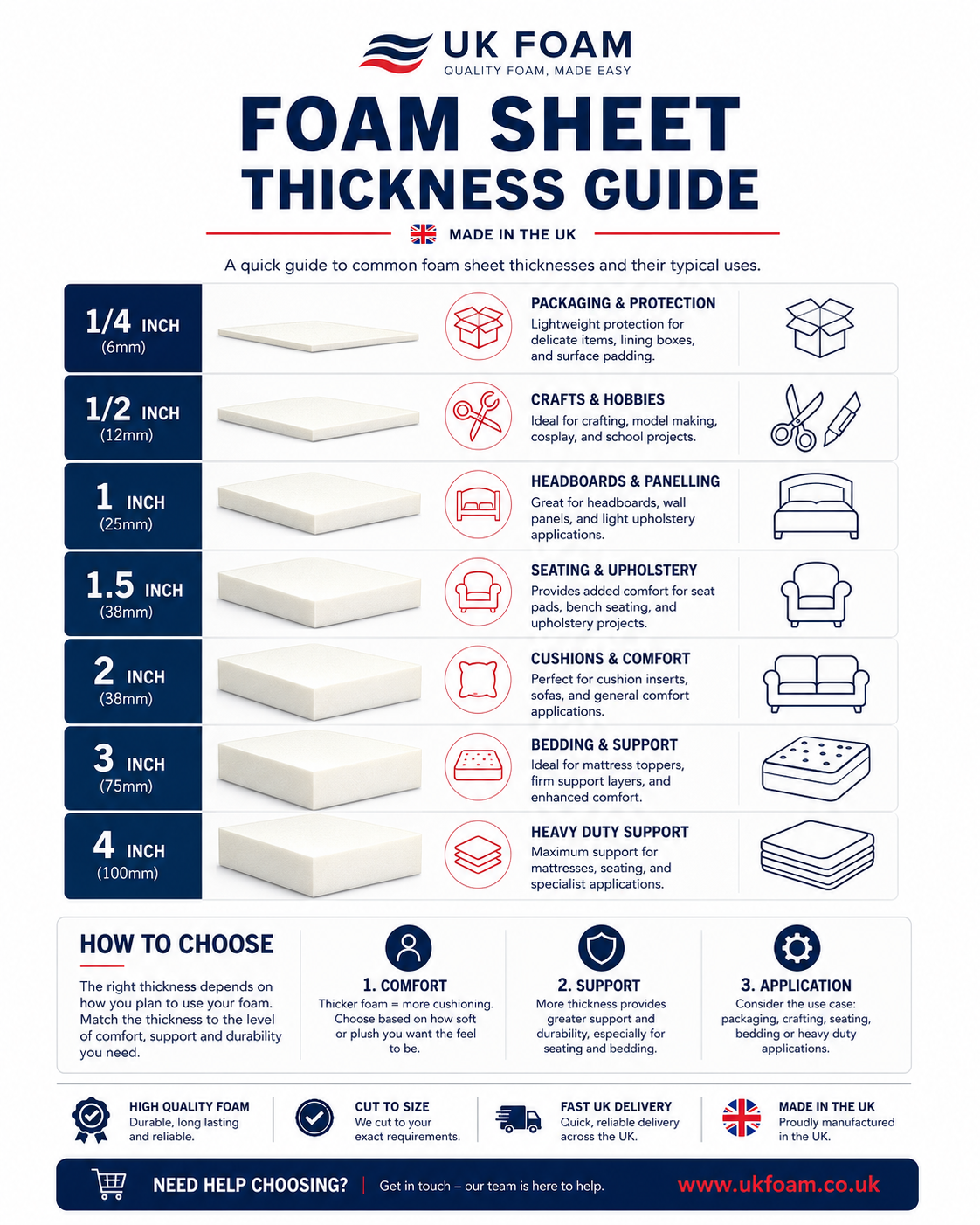
Foam sheet thickness affects how the material performs. A thin sheet can be useful for lining, padding, wrapping or surface protection. A thicker sheet can provide more support, cushioning or impact absorption.
Choosing thickness is not just about comfort. It also affects how the foam fits inside a cover, how it bends, how it compresses and how long it may continue to perform in use.
Thin foam sheets
Thin foam sheets are useful when the foam needs to sit behind fabric, line a surface, wrap an item or provide a light cushioning layer. They can also be used for protection where space is limited.
A thin foam sheet is not usually the best choice for a seat cushion or mattress component unless it is being used as part of a larger construction.
Medium thickness foam sheets
Medium thickness foam sheets are often suitable for chair pads, back cushions, general upholstery work, packaging inserts and protective layers. They provide more depth than thin foam while still being easy to handle and cut.
For many general projects, medium thickness foam gives a good balance between comfort, practicality and cost.
Thicker foam sheets
Thicker foam sheets are usually chosen for seat cushions, replacement pads, mattress-style applications, firm protective packaging or projects where the foam needs to compress under load without bottoming out.
When choosing thicker foam, remember that firmness matters as well. A thick soft foam and a thick firm foam can feel very different in use.
Match thickness to the purpose
Before ordering, ask what the foam needs to do. Is it adding comfort, supporting weight, protecting a product, reducing sound reflection or sealing a gap? Once the purpose is clear, it is easier to select the correct thickness and grade.
You can compare thickness options across the Foam Sheets range.