
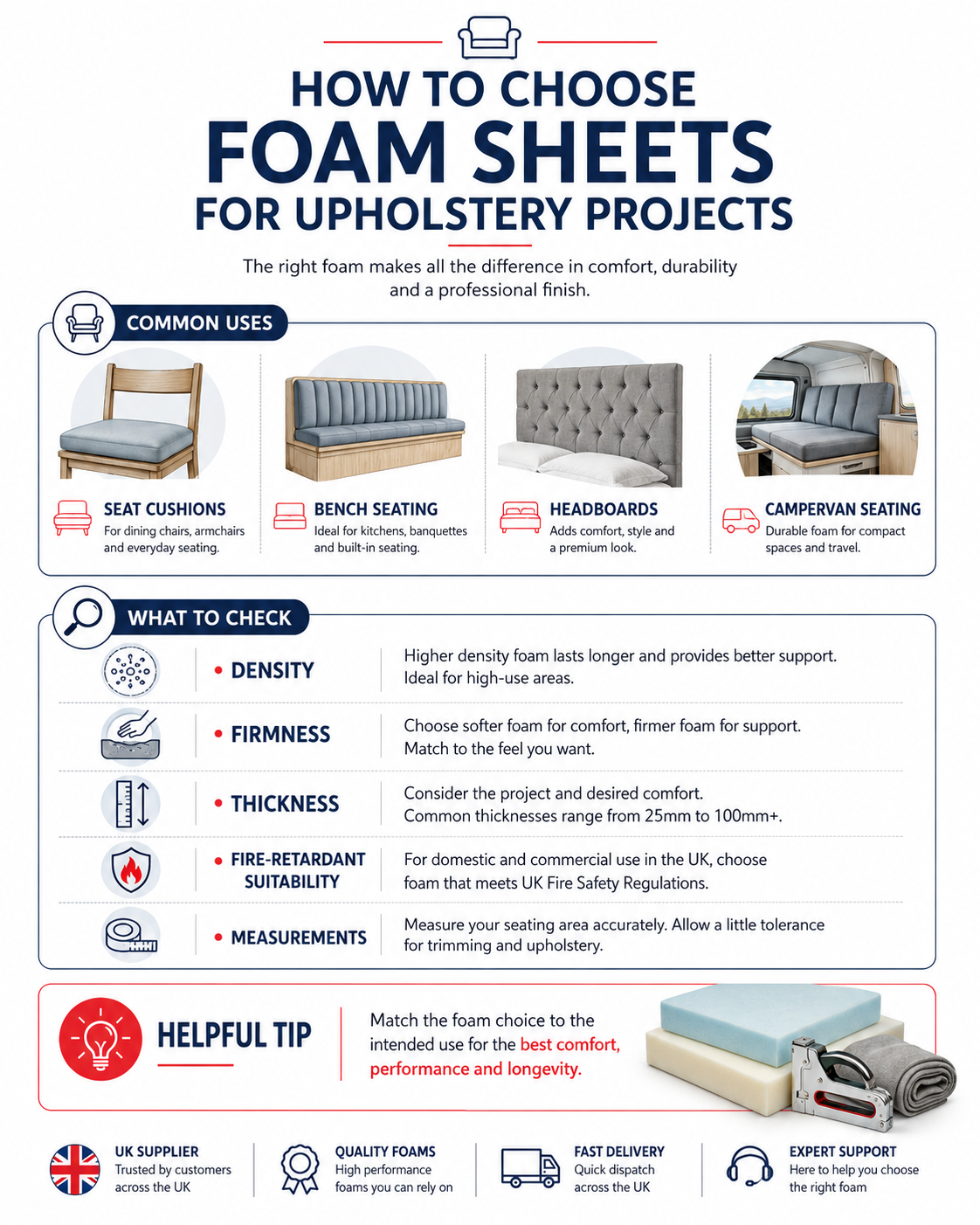
Start with the job the foam needs to do
Foam sheets for upholstery are used in many different ways, from replacing tired seat cushions to creating new chair pads, headboards, window seats and back cushions. The right foam depends on the job. A cushion that supports someone every day needs a different grade from a piece of light padding used on a headboard.
For seating, support and recovery are usually the most important points. The foam should compress under weight, then return towards its original shape after use. For back cushions, a softer or medium feel may be more comfortable, depending on the design of the furniture.
Choose the correct firmness
Firmness affects how the foam feels when it is compressed. A softer foam can work well for light padding, occasional use or areas where comfort is more important than load support. A medium foam is often a practical choice for general upholstery. A firmer foam is usually better for seating that needs more support.
If you are replacing an existing cushion, think about what was wrong with it. If it felt too soft or collapsed quickly, choose a firmer or more supportive grade. If it felt too hard, a medium or softer grade may be more suitable.
Think about thickness
Thickness has a big effect on comfort. A thin foam sheet may work for lining, padding or light use, but it may not provide enough comfort for a seat cushion. A thicker foam sheet can spread weight better and give the cushion more depth.
When replacing foam inside an existing cover, measure the cover carefully. The foam may need to be slightly larger than the cover so it fills the fabric properly. If the foam is too small, the finished cushion can look loose or flat.
Check fire-retardant suitability
Furniture-grade foam used for domestic upholstery should be suitable for the intended use and should meet relevant fire safety requirements. Always check the product details before ordering, especially if the foam will be used in furniture, seating or another regulated environment.
You can compare suitable grades on the Foam Sheets page and review technical information on the Foam Data Sheets page.