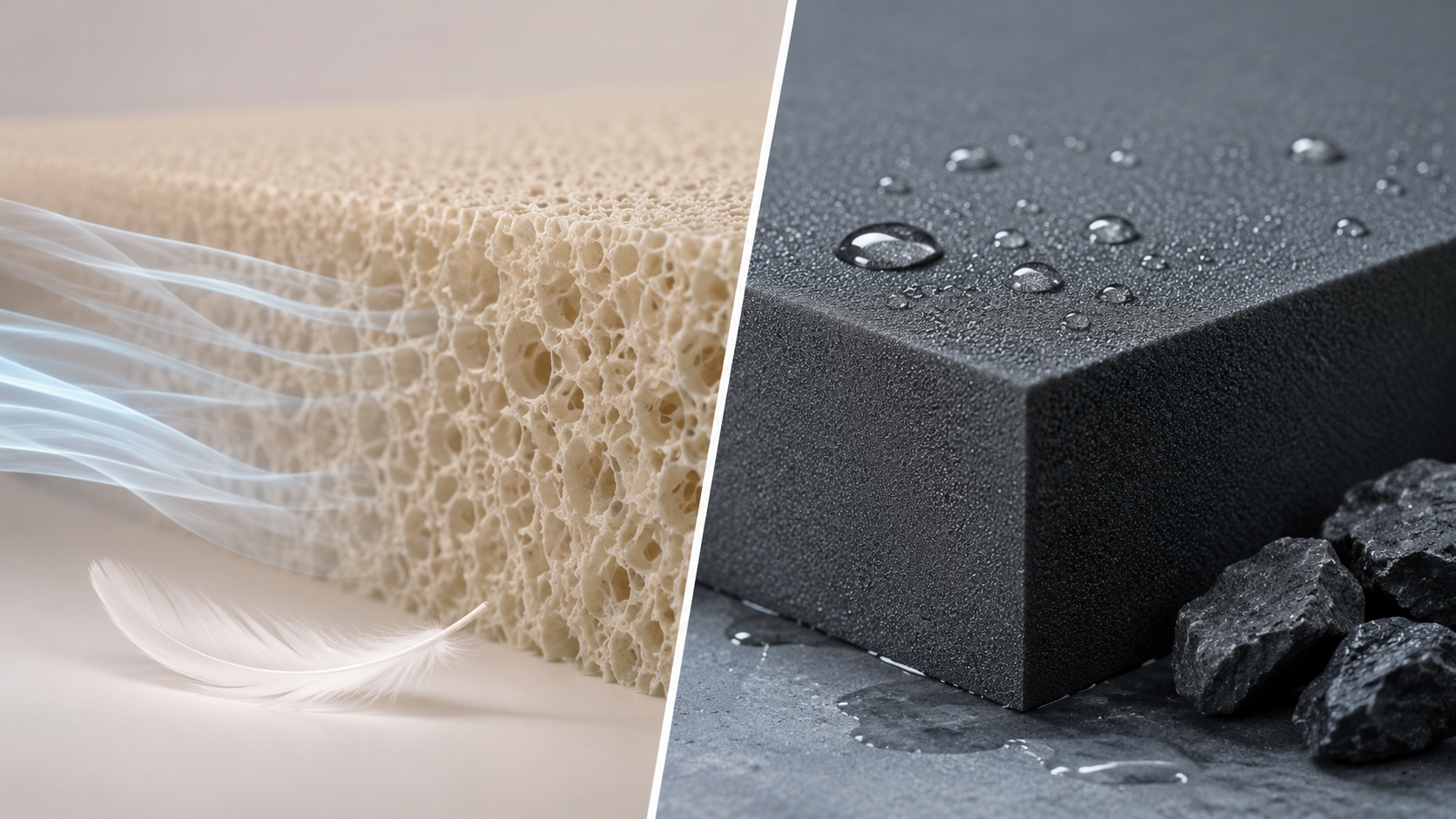
What open cell foam means
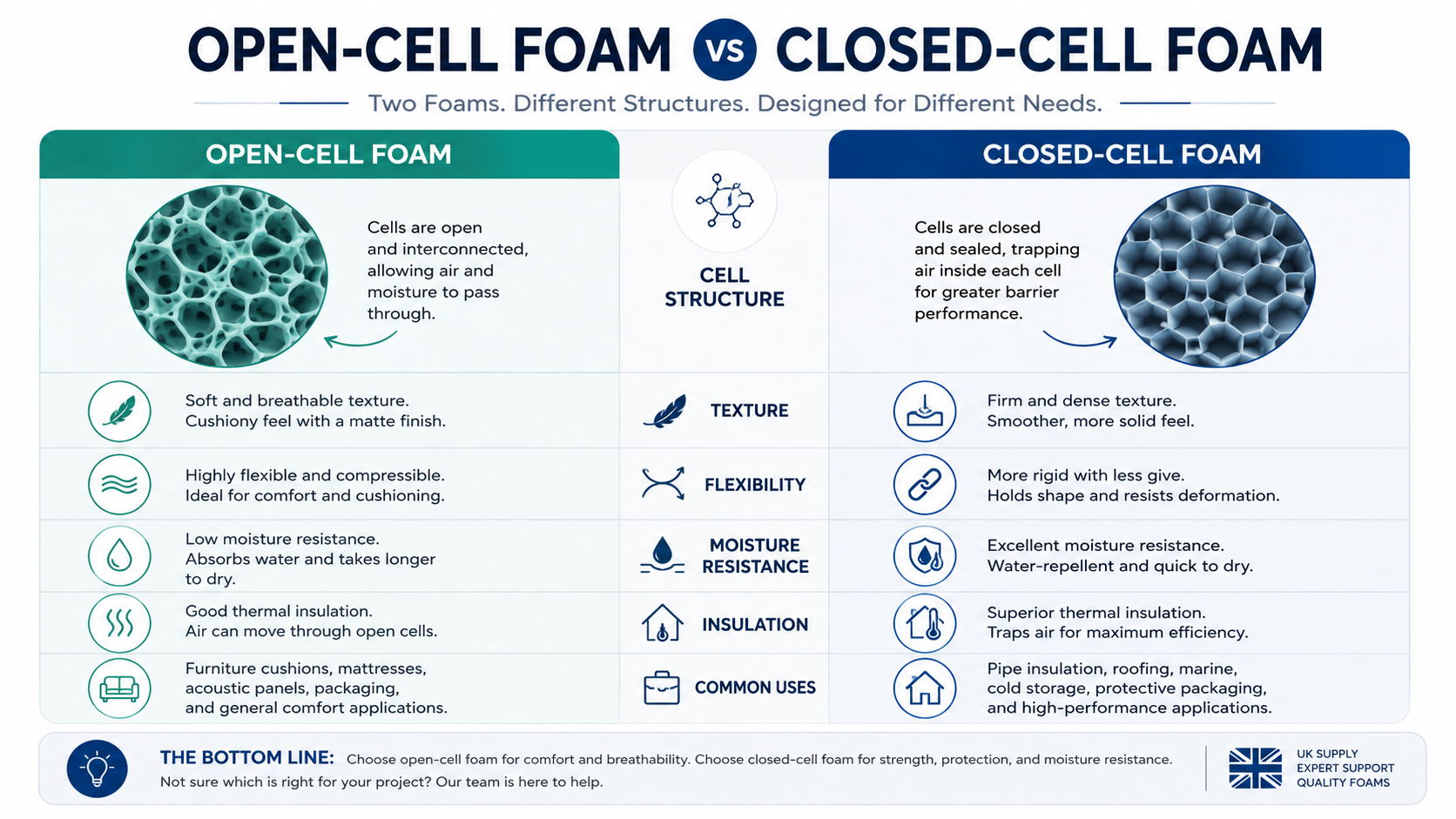
Open cell foam has connected cells that allow air to move through the structure. Many comfort foams, upholstery foams and acoustic foams are open cell.
This type of foam is often chosen for cushioning, seating, padding and sound absorption because it can compress and recover in a useful way.
What closed cell foam means
Closed cell foam has a more sealed cell structure. This can make the material more resistant to water absorption and more suitable for sealing, protection, buoyancy or specialist uses.
Closed cell foams can feel different from open cell foams and are often chosen for practical performance rather than soft comfort.
Common uses for open cell foam
Open cell foam is commonly used in seat cushions, back cushions, mattresses, toppers, acoustic treatment and general padding.
It is often selected when comfort, compression and recovery are important.
Common uses for closed cell foam
Closed cell foam is commonly used for packaging, sealing, gaskets, protection, case inserts, insulation-style uses and environments where moisture resistance may matter.
Different grades vary, so always check the product details before assuming suitability.
Which should you choose?
Choose open cell foam for comfort, cushioning and acoustic uses. Choose closed cell foam where the job requires a tougher, more sealed or more protective material.
Browse the Foam Sheets range to compare both types.